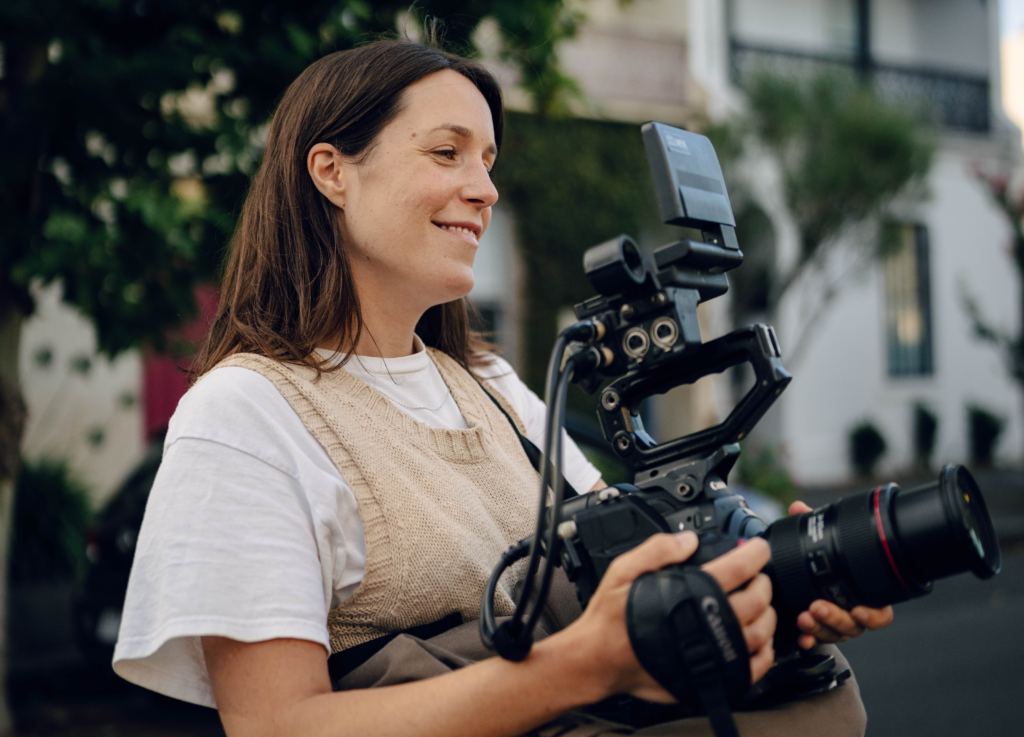
After turning a deeply personal project into a series of sold-out community screenings and an indie cinema hit, the Melbourne filmmaker is developing an ambitious new feature-length documentary about Fitzroy’s history of protest and activism, whilst preserving all that has almost been lost in the most recent waves of Fitzroy’s gentrification.
Growing up on Gore Street in Fitzroy was quiet and relatively mundane, Coldham remembers. “In my childhood, there was a quietness to it that you can’t really imagine today. But it also had a real rough side to it. There were a lot of drugs on Smith Street, which is one block away, and we had to walk a specific way to the local video shop to avoid that. But there was also a very vibrant, creative, artistic scene at the same time.”
From about the age of seven, Coldham had a desire to start capturing the world around her on film. She recalls using plastic cassettes on her older sister’s camcorder to film documentaries about her barbies. “My dad always had a camera around, at every family event, Christmas, travelling, he was always taking pictures on his SLR, so it was a part of my life. I also remember someone coming to my primary school for a photography lesson with lots of disposable cameras, and I thought it was magic that you could capture something, and then it would just exist forever.”
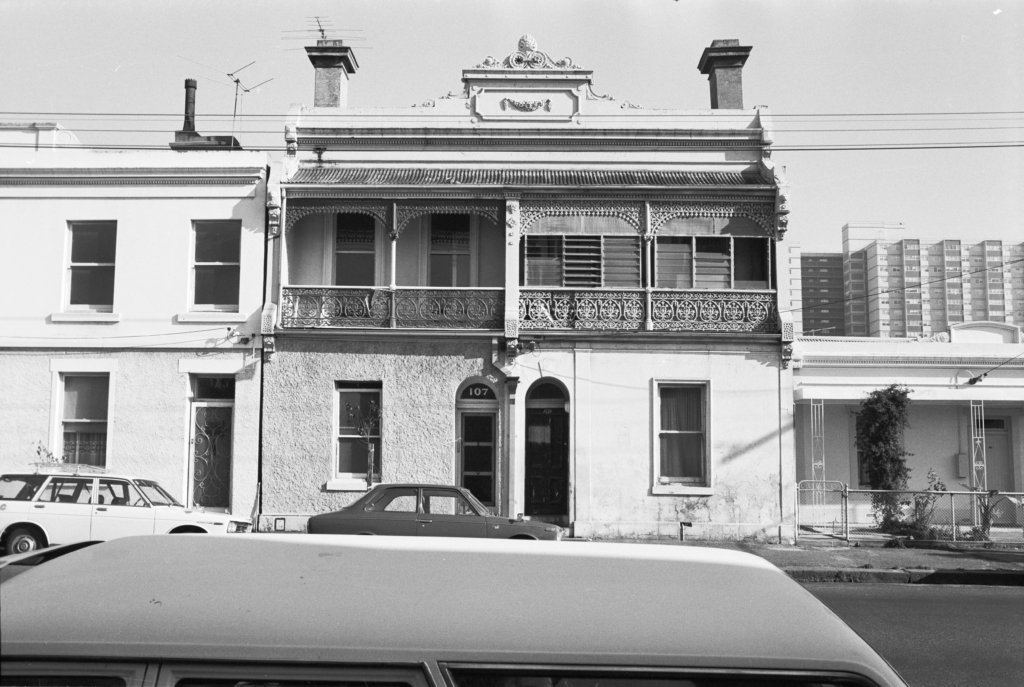
From the front window of her home as a child, Coldham started to witness the different waves of gentrification sweeping through her neighbourhood. “I watched different cultural groups moving in and then moving out, and different businesses opening up and then closing down, and there was a very strong sense of the place where I grew up changing. And then as I got older, it sort of started changing beyond recognition. I just had this urge to capture the essence of the Fitzroy that I knew.”
In 2016, in the days before Coldham was set to move to London, she had a sense of urgency to interview several of her neighbours on Gore Street. “I just thought I need to record some stories now because these people aren’t going to be around forever. I interviewed my direct neighbour Edward Rush, who was one of the first queer mayors of Fitzroy, and then I interviewed my other neighbour two doors down, Angela, and she migrated here from Greece in the 1950s. And I interviewed Rose Chong, who runs the iconic costume shop [on Gertrude Street], and then one of the oldest sisters from the Missionaries of Charity, which was set up by Mother Teresa. I recorded those four interviews, which was my commitment to myself to make the film.”
Years ticked over while Coldham was in London. Angela passed away and Edward Rush was moved into an aged care home with advancing dementia. The interviews Coldham had recorded suddenly took on a gravitas and represented the rapidly vanishing neighbourhood she loved so much. Coldham returned home and secured a $10,000 grant from the City of Yarra to follow through on that commitment she had made to herself a decade earlier and make the short film that would become Gore Street, Fitzroy. “I letter dropped every house on Gore Street, and at that point, I realised there was a sense of excitement from the community about telling the story of Fitzroy and the history as we understood it.”
Word of Coldham’s project spread far and wide. Soon she was receiving calls and emails from all over Melbourne, and even internationally. Everyone seemed to have a piece of the puzzle to contribute. “I wanted the film to record and paint a picture of Fitzroy, but I also wanted it to bring people together and connect people through that history, and I knew very early on that was happening.”
Most of Coldham’s grant went towards post production, licensing archival photos and commissioning a composer and sound designer. “I thought the composition was an important part of creating the atmosphere. I had a really generous cinematographer, Jake Reeder, who actually lived on Gore Street. I bumped into him on the street, and he offered to film the remaining interviews…I was very lucky with that.” With her own personal investment supplementing the production budget, Coldham completed her short film in time for an outside summer premiere screening of the film.
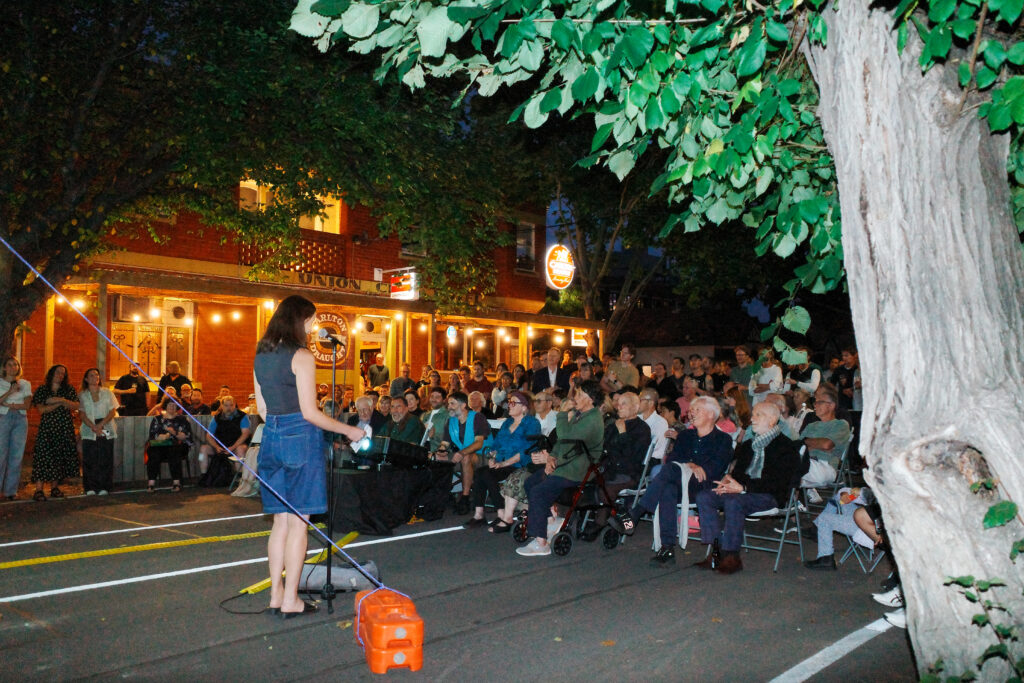
“I always had a vision to premiere the film on the street outside, so it played in the setting in which it was made. And sometimes I get an idea and I just absolutely go for it. I had to get council permission and all these permits. We had to have traffic control, and I had to letter drop everyone within 100-meter radius of the Union Club Hotel, which was a lot of work for one person. But we did it and it was the most special night.”
In the lead up to the film’s premiere, while Coldham was worrying about permits and seating arrangements and Melbourne’s notoriously unreliable weather, she had forgotten to stress about the actual content of the film. Then the day came, and a flood of nerves came with it. “It’s quite a personal story, dealing with grief and my family and the loss of my mum. And I thought people might be expecting a history account, and it’s more this personal, anecdotal, reflective, experimental piece. So, I had this freak out. But something about that personal approach resonated more.”
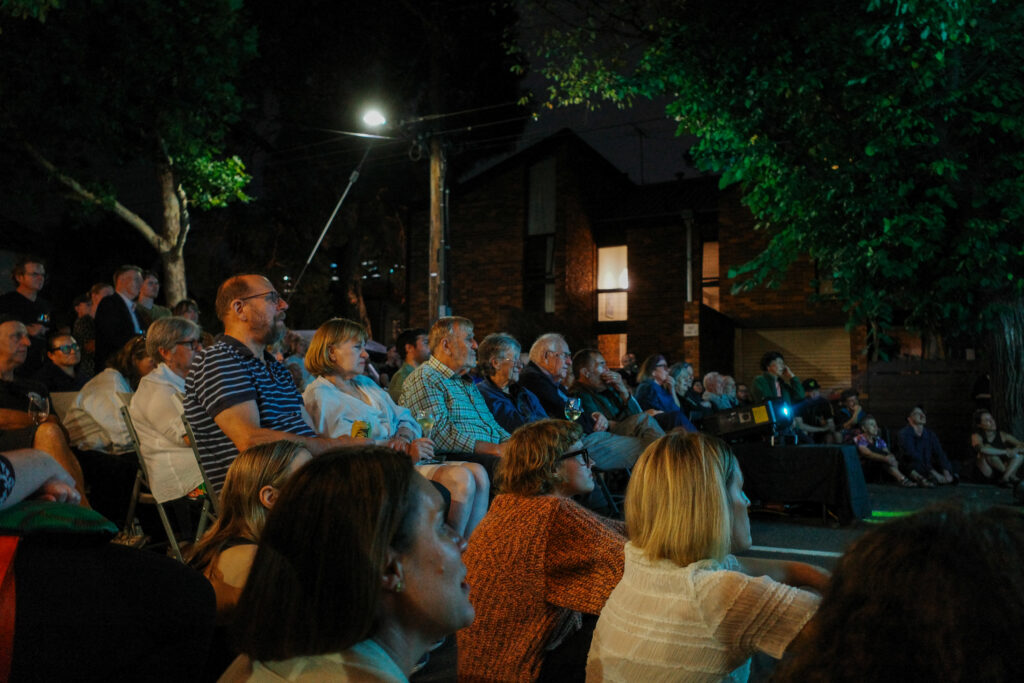
In the audience were older Greek men, people from the Russian house and various other characters who appear in the film who had never seen themselves on screen and probably never imagined that they would. “They were all sitting there watching it, and we’re all there sharing this moment. And afterwards, there was just so many hugs and tears.”
What started as an exercise in preserving a filmic time capsule of the people on the street Coldham knew and loved best, morphed into a spectacular pulling together of community. After three sold out community screenings, Coldham received an email from Cinema Nova, Melbourne’s leading independent cinema, and booked in a month-long run of the film at the cinemas she frequented as a child, including a gala night and Q&A. In fact, it was at Cinema Nova that Coldham saw James Marsh’s 2008 documentary Man on Wire and decided she wanted to become a documentary filmmaker herself.
The response to the run at Nova was overwhelmingly positive, Coldham reflects. “This was the first time I made something and went completely with my own vision; it’s classic that that’s the thing that ends up resonating the most.” The lesson Coldham takes away is if you have a piece of work that you strongly believe in and you know its audience through and through, then you can have a lot of confidence sitting behind that.
Off the back of Gore Street, Fitzroy, Coldham has secured VicScreen development funding and teamed up with seasoned and award-winning producer Philippa Campey to start work on a feature-length documentary expanding on Fitzroy’s history of protest and activism, as well as its storied past as Melbourne’s oldest suburb. “I’m feeling equal parts excited and daunted by the scale of it, and a pressure to tell the story properly and not miss any critical parts out… Also, the way I want to tell this history is through emotion and memory and feeling…it’s kind of a different way of recording history, and maybe that will help me to limit the scope.”
Learn more about Zoe Coldham’s feature documentary project here, and discover if you are eligible for VicScreen’s Development on Demand funding here.